














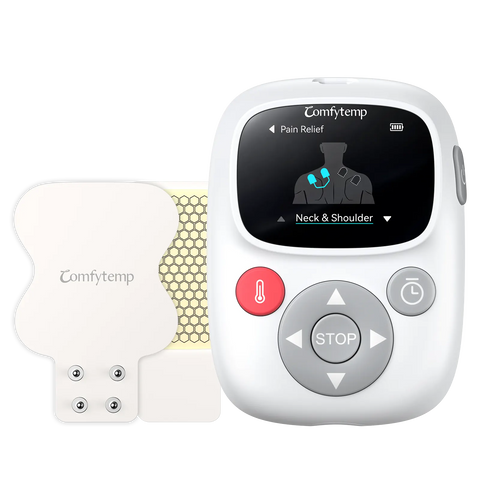
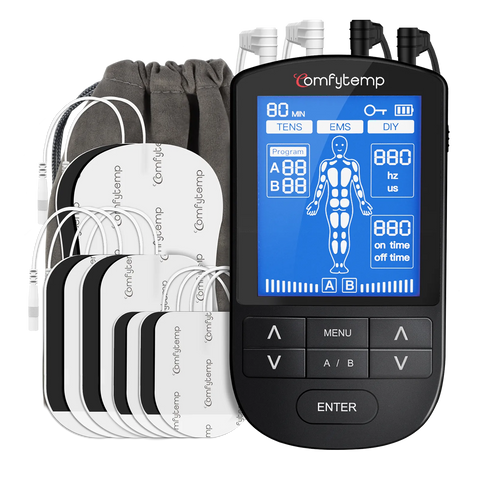

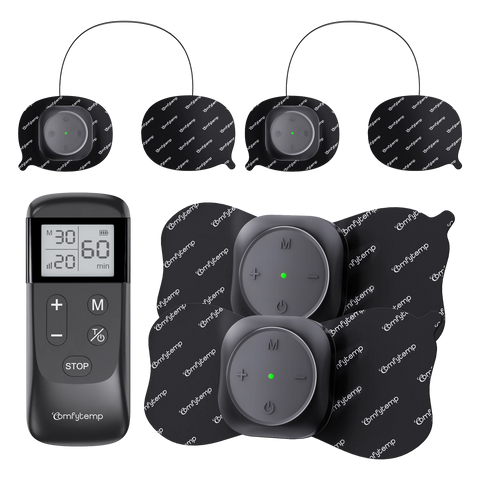
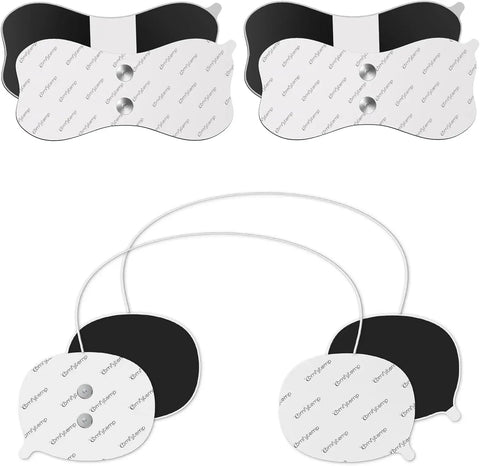


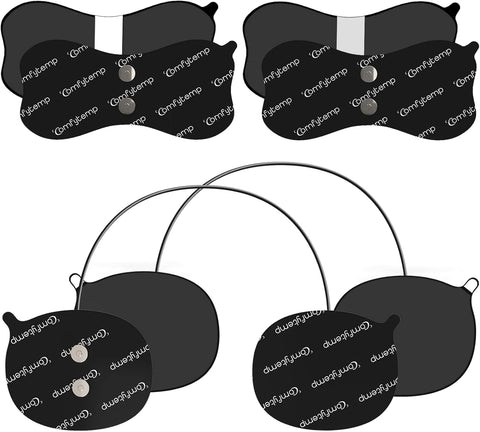

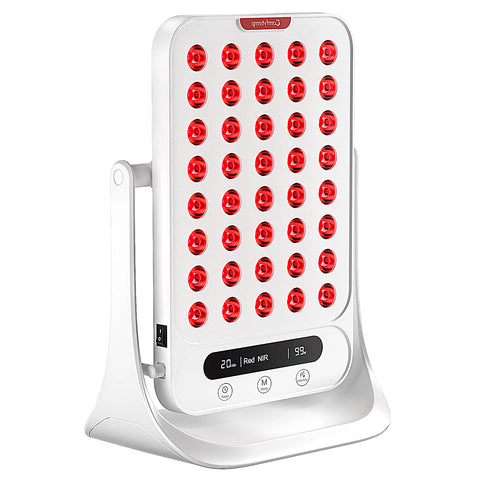


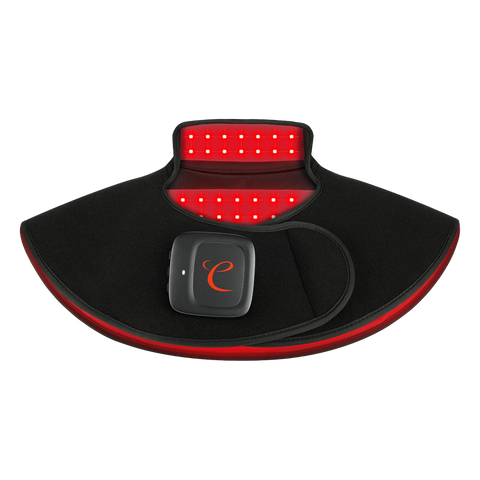
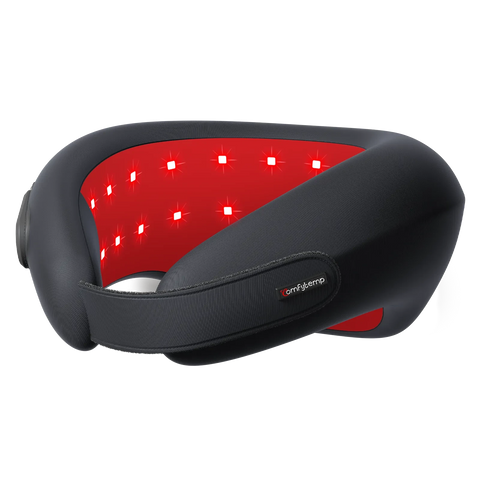





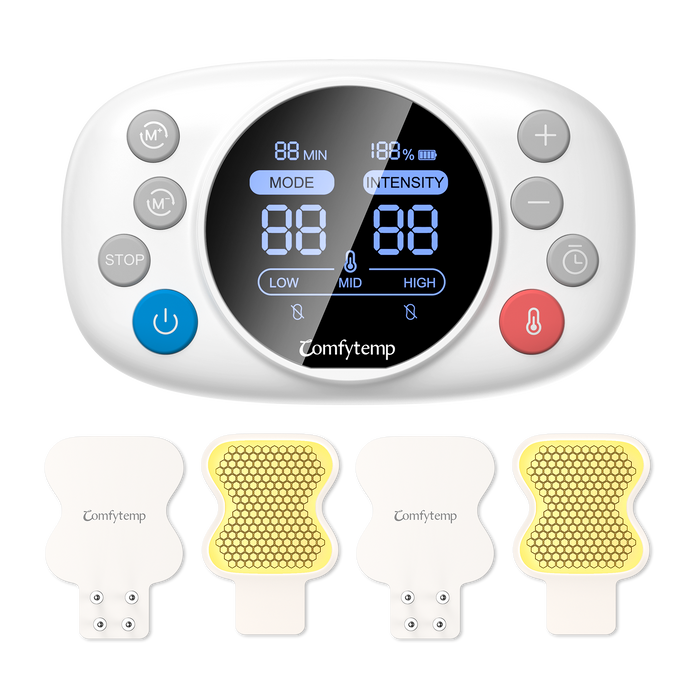
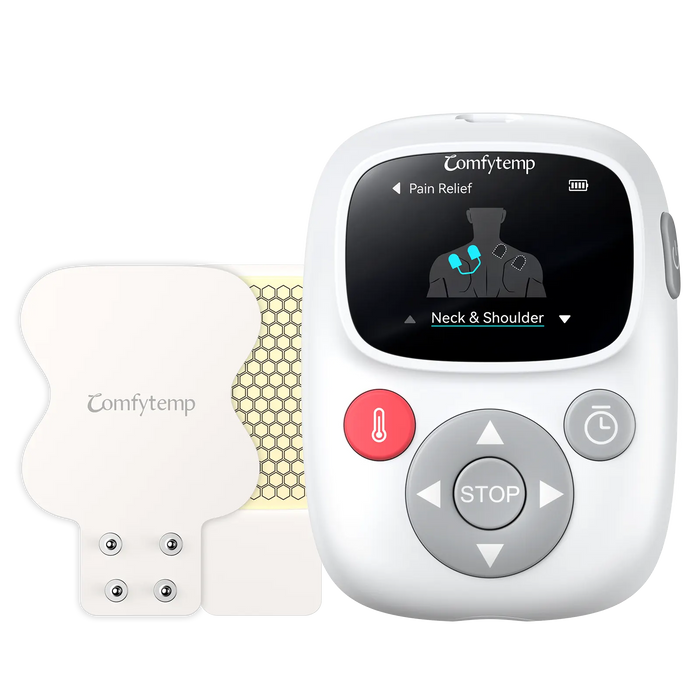

If you are weighing are expensive tens units worth it while staring at two product pages that look nearly identical, you are asking the right question — and the honest answer is "only for some of the money." A TENS unit is a small electrical device that sends low-voltage pulses through electrode pads on your skin to help relieve sore, aching muscles, and the price gap between tiers is rarely explained by how well it does that core job. Comfytemp builds both corded and cordless TENS options, so we have no interest in pretending price equals relief. Here is where the extra dollars actually show up.
Quick Answer: No — a higher price mainly buys better channels, modes, and build quality, not "stronger" pain relief. A budget unit that fits your body area and has adjustable intensity can work as well as a premium one for occasional sore muscles; pay more only if you need multi-channel coverage, wireless use, or a heat combo.
What Budget and Premium TENS Units Share
Before you compare features, know what you are always paying for: the same underlying technology and the same regulatory baseline. TENS units sold in the US are Class II medical devices, meaning manufacturers must show the FDA that their device is safe and effective for its labeled use — and that applies to a $30 unit as much as a $300 one. You are not buying "real medical technology" by spending more; you are buying configuration and convenience.
The second shared element is the uncertain part of TENS itself. Cleveland Clinic notes that more research is needed to fully understand how TENS works and that existing studies show it relieves pain in some cases. A premium device does not resolve that uncertainty — some people respond well to TENS, some feel little, and no price tier changes your personal response. That is the single most useful thing to understand before you spend.
What this means practically: a cheap unit with fresh electrode pads and an intensity level you can feel comfortably is a legitimate first test. If TENS does not help your sore muscles after a fair trial, upgrading to a fancier unit usually will not fix that.
Where Extra Spending Shows Up: Channels, Modes, and Build
Money does buy real things — just not the things most marketing pages lead with. Here is the honest breakdown of what separates tiers:
| Feature | Budget tier | Premium tier | Does it matter to you? |
|---|---|---|---|
| Number of channels | Usually 1 (2 pads) | 2 or 4 (4–8 pads) | Yes, if you want to cover two areas at once |
| Wireless / app / remote control | Rare | Common | Yes, for daily use on the move |
| Built-in heat | Rare | Available as a combo | Yes, if you prefer warmth with stimulation |
| Preset modes | A handful | Dozens | Rarely — most people use 1–2 settings |
| Build and pad quality | Basic | Better cables, longer-lasting pads | Moderately — replacement pads are cheap |
| Price | Lower | Higher | — |
The channel count is the clearest functional divide. A single-channel unit treats one patch of sore muscle at a time; a dual- or four-channel unit lets you place pads on, say, both shoulders. If your soreness is localized, that premium is wasted. Medicare's coverage rules for TENS units are a useful sanity check on how the medical system itself values these devices — coverage hinges on whether the device is medically necessary for your situation, not on how many modes it has.
Wireless and combo designs (TENS plus soothing heat in one wearable) are where premium spending feels most justified in daily life, because they remove the friction that makes people stop using a device. A cordless unit you actually wear beats a powerful one that stays in a drawer.

Features That Rarely Change Your Experience
This is where the "premium equals better" story falls apart. Several expensive features mainly affect the unboxing, not the outcome:
- Dozens of preset programs. Most users settle on one or two comfortable settings and never touch the rest. A unit with five well-chosen modes can serve you indefinitely.
- Fancy packaging and travel cases. Nice, but non-functional. Buy a pouch separately for less.
- Bluetooth apps with elaborate dashboards. Helpful for some, but if you dislike using your phone mid-session, you are paying for software you will ignore.
- Very high channel counts for a single small area. Extra pads do not add relief to the same sore spot; more is not better here.
- "Clinical strength" language. There is no standardized consumer scale for TENS intensity — what matters is whether the sensation is comfortable and strong enough for you at your own setting.
There is also a distribution factor: TENS units are widely available over the counter at pharmacies and online, so premium prices are not a proxy for scarcity or exclusivity of the technology. Caveat: research on TENS for any specific condition does not transfer automatically to every device — stimulation parameters differ, and results vary by body area and intensity, as a Medical News Today overview of TENS research explains.
Who Should Not Rely on a TENS Unit (and When Price Is Irrelevant)
No price tier makes TENS appropriate for everyone, and this is the section most buying guides skip. Talk to a healthcare provider before using TENS — especially if you are pregnant or breastfeeding, have a pacemaker or implanted electronic device, have epilepsy, or are recovering from surgery; consult your healthcare provider before use in these cases. Do not place pads over the front of the throat, the head, broken skin, or areas of numbness you cannot feel.
TENS is also a poor fit for some pain patterns. It is intended for temporary relief of sore, aching muscles from exercise or normal household work, and for muscle stimulation in healthy muscles — not for diagnosing or treating a disease. If your pain is sharp, one-sided, spreading, or accompanied by weakness or numbness, a device purchase is the wrong next step. And if symptoms persist or worsen, see a medical professional rather than upgrading your equipment.
The Medicare coverage rules echo this: coverage depends on a demonstrated need for the therapy, not on which model you prefer. If a device is not the right tool for your situation, spending more does not change that.
How to Decide Which Tier Fits Your Needs
Use this step-by-step method before you buy, in order:
- Define your use case in one sentence. "Sore lower back after lifting" needs a different unit than "shoulder tension every workday."
- Count your target areas. One area = one channel is enough. Two or more areas used at the same time = pay for extra channels.
- Test the cheap tier first if you are new to TENS. Try a basic unit with adjustable intensity for a couple of weeks. This is the most reliable way to learn whether you respond — far better than reviews.
- Upgrade only for friction removal. If you stopped using the basic unit because of cables, cords, or awkward placement, pay for wireless, app/remote control, or a wearable design.
- Check the consumables cost. Electrode pads wear out; verify replacement pads are available and affordable before buying any model.
- Check your funding options. Some flexible spending and health savings accounts can pay for nonprescription units — Healthline's TENS placement guidance notes these accounts may cover nonprescription devices, so confirm eligibility for the specific product.
- Match the form factor, not the feature list. If you want warmth, a TENS-plus-heat combo may matter more than any mode count; if you travel, a cordless unit earns its premium.
The most common mistake shoppers make is buying a premium unit "to be safe" before testing whether TENS works for them at all — or, reversing it, buying a rock-bottom unit and concluding TENS is useless when the pads were simply worn out or the intensity was set too low. A second common mistake: spending on extra modes while ignoring electrode quality, which affects comfort more than any program.
Frequently Asked Questions
Q1: Are expensive TENS units stronger or more effective?
Not necessarily. Intensity is adjustable on nearly all units, and stronger sensation is not the same as better relief. Price tends to track features and build quality, not a more effective therapeutic dose.
Q2: How long should I try a TENS unit before deciding if it helps?
Give it a fair trial over several sessions at a comfortable intensity. A 2012 review referenced in TENS research suggests relief duration may increase after repeated treatments, though this remains an area where more research is needed. If nothing changes after a consistent trial, a pricier unit is unlikely to help.
Q3: Do I need a prescription for a TENS unit?
Usually not — over-the-counter units are widely available. Medicare may cover rental or purchase in certain situations with documentation, but its rules are about medical necessity rather than device tier.
Q4: Can I use a TENS unit with heat at the same time?
Combo devices combine both, and soothing heat is intended for temporary relief of minor aches and pains. If you use separate products, apply heat carefully and check your skin; consult your healthcare provider first if you have reduced skin sensation or circulation.
Q5: Is a wireless TENS unit worth the extra cost?
For daily users, often yes — if cords were why you stopped using a cheaper unit, wireless is the premium that pays off. For occasional use, a budget corded unit is usually the better first purchase.
Conclusion: Spend on Fit, Not on Hype
The dollars that buy real differences are the ones that remove friction: an extra channel for a second sore area, a cordless design you will actually wear, or a TENS-plus-heat combo for cozy sessions. Everything beyond that is largely packaging. Set your use case first, test the technology affordably, and upgrade only when you know what is missing — that is the decision framework that saves money without sacrificing relief. If you are ready to explore cordless or combo options, Comfytemp's TENS lineup is built around drug-free, non-invasive, professional-grade-at-home devices with adjustable intensity and wireless designs, so you can match the device to how you actually recover.


