


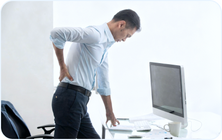





As many as 84% of adults will experience low back pain at some point in their lives, according to The Lancet. Most of them will eventually reach for a heating pad for back pain — and most of them will use it wrong: too hot, too long, or at exactly the wrong moment.
If your first instinct is to plug in and crank the dial to high, you're in good company. Back pain is the most common pain American adults report: 39% had it in the past three months, according to National Health Interview Survey data (CDC/NCHS). More than 130 million U.S. adults live with chronic pain that never fully goes away (Business Research Insights, 2025).
Heat, though, is a tool, and tools come with manuals. By the end of this guide, you'll know whether heat is right for your pain, how long and how often to use it, and which type of pad fits your life. Let's start with what's happening under your skin.
How a Heating Pad Relieves Back Pain
The benefits of a heating pad go beyond simple warmth. Here's the science, minus the jargon.
The Science in 60 Seconds: Vasodilation, Muscle Relaxation, and the Gate Control Theory
What does a heating pad do for back pain? It delivers steady warmth that widens blood vessels in sore muscles, boosts oxygen-rich blood flow, relaxes tight tissue, and crowds out pain signals before they reach your brain. The result: less stiffness, easier movement, and drug-free relief for chronic muscle aches.
When warmth soaks into sore tissue, blood vessels widen — a process doctors call vasodilation. More oxygen and nutrients flow in while metabolic waste gets flushed out of cramped muscles. Warm muscle also stretches more easily and stops guarding the sore spot — breaking the tension-spasm cycle.
There's a sneakier mechanism, too. Your spinal cord acts like a traffic gate for sensations; warmth floods it with pleasant, non-painful signals, crowding out pain messages trying to reach your brain. Researchers call this the gate control theory — it's why relief often starts within minutes.
This approach is known as thermotherapy — the controlled use of warmth to relieve pain. If you want the fuller picture — where heat fits alongside stretching and cold therapy — our complete guide to heat therapy breaks it down.
Picture David, a 52-year-old accountant: every morning, he starts with 20 minutes of low heat across his lower back while he reads the news. The stiffness that used to last until lunch usually fades before his first coffee is done.
What the Research Says
Clinical trials back the theory up. In a randomized clinical trial of 87 patients with acute low back pain, researchers compared one week of treatment: a hot water bag plus the anti-inflammatory naproxen, an ice pack plus naproxen, or naproxen alone. By day 15, the heat group's average pain score had fallen to under 1 — far below the ice group's 2.2 and the medication-only group's 5.6 (PubMed, 2014).
In plain English: heat didn't just beat doing nothing — it beat cold, and it made real medication work better. Heat works best as a teammate to standard treatment, not a replacement.
Heat or Ice for Back Pain: Which One Do You Need?
Before you switch on a heat pad for back pain, first ask whether heat is even the right tool. Choose the wrong one and a two-day twinge can become a two-week problem:
|
Your situation |
Better choice |
Why |
|
Chronic ache, morning stiffness, soreness after long sitting |
Heat |
Relaxes tight muscles and improves circulation to slow-healing tissue |
|
Acute injury within the first 48–72 hours (a fall, strain, or sudden flare-up) |
Ice |
Numbs sharp pain and limits swelling while the injury is fresh |
|
Skin that looks red, swollen, or feels warm to the touch |
Ice |
Heat increases blood flow and can make inflammation worse |
|
Numbness, loss of bladder or bowel control, fever, or pain after a major fall |
Call a doctor |
These are red-flag symptoms that need medical evaluation, not self-treatment |
It's simple biology: in the first 48–72 hours after a strain or flare-up, your body is in an acute inflammatory phase — vessels are leaky and tissue is swollen. Adding heat pours more blood into an overloaded zone, while cold numbs the area and keeps swelling in check.
Heat is for the pain that lingers: morning stiffness, the dull ache after a day at a desk, chronic tightness that never quite lets go. No fresh injury, no swelling, no red-flag symptom? That's heating-pad territory. If a "simple ache" hasn't improved after a couple of weeks, get it examined — chronic doesn't always mean harmless.
How to Use a Heating Pad for Back Pain Safely
The difference between relief and regret usually comes down to a few small habits. Run this five-step routine every time:
- Inspect the device first. Check for frayed cords, cracks, or scorch marks. If anything looks damaged, don't use it.
- Put a barrier between pad and skin. A thin towel or a layer of clothing is enough. Direct contact is how low-temperature burns happen.
- Start on the lowest setting. Give it 5–10 minutes, then step up only if needed. You can always add heat — you can't un-cook your skin.
- Set a timer for 15–20 minutes. Don't guess. When it rings, the session is over, even if it feels great.
- Take at least an hour off and check your skin. Look for blotchy redness, unusual darkness, or lingering tingling before another session.
How Long and How Often to Use a Heating Pad
For most adults the sweet spot is 15–20 minutes per session, two to three sessions a day. Daily use is fine for chronic pain if your skin looks and feels normal between sessions. Want heat "all evening"? Spread three short sessions across the day instead.
Temperature: Why "Low and Medium" Beats "High"
High heat feels productive but usually works against you. Deeper relief comes from sustained, comfortable warmth: maximum settings shorten the sessions you can tolerate and irritate skin, while low and medium keep you where vessels dilate and muscles release. A gentle simmer beats a full boil.
5 Mistakes That Make Back Pain Worse
1. Sleeping with the pad on. Hours of unattended heat is the single fastest route to a burn.
2. Skipping the towel barrier. Modern pads run warm enough to injure bare skin over time, even at "comfortable" settings.
3. Lying on top of the pad. Body weight presses heat tight against skin and strains the heating elements. Pad behind you, never under you.
4. Heating a brand-new injury. Remember the 48–72 hour rule above. Picture Jason, a 38-year-old who helped a friend move a sofa one Saturday: he felt a sharp pull in his lower back and immediately wrapped it in heat all weekend. By Monday, the area was more swollen and stiffer than on day one — he'd spent the exact window his body needed cold and rest doing the opposite.
5. Ignoring the rebound effect. Stay on the pad for 30, 40, 50 minutes, and the vessels that heat widened can constrict again — often leaving the ache worse than before. That's exactly why the timer matters.

Types of Heating Pads for Back Pain
"Heating pad" is an umbrella term covering several very different tools:
- Electric pads — plug-in pads with adjustable heat settings; the versatile home default.
- Weighted pads — electric pads with added weight for gentle, calming pressure.
- Cordless & battery-powered pads — rechargeable pads you wear while moving, working, or commuting.
- Microwavable pads — gel- or grain-filled pouches warmed in the microwave; cheap and portable, but they cool fast.
- Infrared pads — pads that use infrared rays, which reach deeper tissue than surface heat alone.
- Moist heat pads — pads or covers that add humidity, making the same temperature feel hotter and sink in deeper.
Electric Pads (Including Weighted and XL Options)
Plug-in electric pads remain the workhorse — about half of all heating pad use in North America runs through them (Business Research Insights, 2025). Size matters more than people expect: a compact 12" × 12" pad covers a shoulder blade, not a lower back. XL pads (often 17" × 33") drape across the whole lumbar region, while weighted models add gentle pressure that calms muscle guarding. The ComfyTemp weighted heating pad (12" × 24") is a good example: wide enough for the lumbar area, heavy enough to stay put.
Cordless & Battery-Powered Pads
This is where the category is moving fastest — about 35% of new models now ship with digital controls or rechargeable batteries, and roughly one in five is a smart portable design with app control or infrared heating (Business Research Insights, 2025). Shoppers have noticed: the best-selling heating pad on Amazon US moves around 100,000 units a month (ASINSIGHT, 2026). The price you pay for that freedom: shorter run time and a higher price tag.
Microwavable, Infrared, and Moist Heat Pads
Microwavable pads cost little, need no outlet, and heat in two minutes — but they cool within half an hour. Infrared pads warm tissue more deeply than surface heat, which some people with deep muscle pain prefer. Moist heat pads add humidity, so the same temperature feels hotter and sinks in deeper — one reason physical therapists favor them.
Moist Heat vs. Dry Heat: Which Is Better?
|
Moist heat |
Dry heat |
|
|
Intensity |
Feels stronger, works faster |
Milder but steadier |
|
Practicality |
Cools fast, can dampen clothes |
Holds warmth longer, keeps clothes dry |
Both relieve pain — and the better one is the one you'll use consistently.
How to Choose a Heating Pad for Back Pain: Scenario-Based Guide
Spec sheets don't buy pain relief — scenarios do. Match the pad to the moment your back actually hurts.
Scenario 1: Chronic Morning Stiffness → a Large Weighted Pad
When stiffness greets you before your feet hit the floor, you need coverage and gentle pressure more than exotic features. Look for: 17" × 33" or larger coverage, 3–6 heat settings, weighted fabric that drapes without sliding, auto shut-off, and a machine-washable cover. Our pick: the ComfyTemp XL heating pad for lower back — full-width lumbar coverage with multiple heat settings and auto shut-off. Pair it with David's routine above.
Scenario 2: Desk Workers and Commuters → a Cordless Pad You Can Wear
If your pain shows up at 2 p.m. in an office chair, you need heat that doesn't tether you to an outlet. Look for: 4+ hours of battery life, a slim profile that hides under clothing, straps that stay put when you stand, and a fast recharge. Our pick: the ComfyTemp cordless heating pad with massager — a rechargeable wrap with three heat and three vibration settings that stays put while you move.
Scenario 3: Post-Workout Recovery → an Adjustable Multi-Setting Pad
Training soreness rewards precision. Look for: fine-grained heat settings (six levels beat three), a heat-up time under two minutes, and a timer with auto shut-off. After a heavy lifting day, 15 minutes on medium beats an hour on high — the rebound rules apply here too.
Scenario 4: Period-Related Back Aches → a Flexible Wraparound Style
Menstrual pain that settles into the lower back responds well to continuous, low-level, close-fitting heat — a systematic review of six randomized trials found heating pads relieved primary menstrual pain at least as well as common painkillers (Scientific Reports, 2018). Look for: soft, flexible material, a waist strap, and discreet styling you can wear under clothes.
Whatever your scenario, run every candidate through this six-point check:
- Size — covers the whole painful area
- Heat settings — at least 3, ideally 6
- Strap design — stays in place when you move
- Auto shut-off — non-negotiable
- Machine-washable cover — because backs sweat
- UL or ETL certification — the quiet marker of a safe device
Found your scenario? Compare sizes, heat settings, and strap designs across the full ComfyTemp heating pad collection — every style mentioned in this guide lives there.
Where to Place a Heating Pad for Back Pain
Lower back. Center the pad over the sore spot between the hip bones — where most back pain lives. Sit back against it in a chair, or lie on your side with it snug against the lumbar curve — pad behind you, never under you.
Upper back and shoulders. This is usually referred tension from desk posture or stress, not a local injury. A pad that drapes over the top of the spine and both shoulder blades works best; a weighted heating pad designed for the neck and shoulders is shaped for exactly this territory.
Sciatica. When pain shoots from the buttock down the leg, heat where the irritation starts — the lower back and buttock — instead of chasing the burn down the thigh. Keep sessions short, since leg skin can be more sensitive than you'd expect, and skip heat on any numb or tingling skin. If the ache settles into the calf, a flexible leg heating pad for pain relief can follow the same low-and-slow rules.
Safety: When NOT to Use a Heating Pad
A heating pad is one of the safest home remedies around — which is exactly why people forget it has limits. Three limits are worth knowing before your next session.
Contraindications Checklist
Do not use a heating pad on or around:
- Open wounds or broken skin — heat delays healing and invites infection.
- Areas with reduced sensation — if you can't feel the pad properly, you can't feel it getting too hot.
- Diabetic neuropathy — nerve damage blunts the warning signs of a burn.
- A suspected deep vein thrombosis (DVT) — a swollen, painful, warm calf needs urgent medical care, not heat.
- Pregnancy — skip the abdomen entirely and check with your doctor before regular use on the back.
When in doubt, ask a doctor or pharmacist first.
Toasted Skin Syndrome: The Risk Nobody Talks About
It sounds almost comical; it isn't. Toasted skin syndrome — doctors call it erythema ab igne — is a net-shaped, reddish-brown rash caused by repeated, prolonged contact with mild heat: laptops, heated car seats, hot water bottles, and yes, heating pads. According to Harvard Health, skin doesn't need to burn to be damaged — warmth as mild as 109–115°F (43–46°C), applied long enough, can discolor skin in that distinctive fishnet pattern.
The strange part? It doesn't hurt, so most people don't notice until the pattern has already set in. Lower the setting, limit the duration, and check the skin you've been heating. Caught early, the discoloration usually fades over weeks; left alone it lingers far longer.
Fire and Device Safety
Heating pads and electric blankets are linked to roughly 500 house fires a year in the U.S., and most involve products more than 10 years old (ESFI). Four habits will keep you out of that statistic: retire any pad older than a decade, never run the cord under a rug or pinch it in a sofa, plug directly into the wall, and unplug when you're done. Look for UL or ETL certification on the box.
FAQ
Q1: How long should you use a heating pad for back pain?
15–20 minutes per session, two to three sessions a day. Use a cloth barrier, stay on low or medium, and give your skin an hour between sessions. Longer isn't better — past about 30 minutes you risk burns and the rebound effect, where pain returns stronger than before.
Q2: Can you sleep with a heating pad on?
No. Falling asleep with a pad on is the most common way people burn themselves — you lose the feedback loop that tells you it's too hot. Auto shut-off helps, but it's a backup, not a plan.
Q3:Want warmth in bed?
Warm the bedding first, then switch the pad off.
Q4: Does a heating pad help sciatica?
It can help the muscle component. Sciatic pain often eases when tight muscles in the lower back and buttock relax, so short, gentle sessions on the lower back or buttock — not directly on the burning leg — are worth trying. Persistent leg pain, weakness, or numbness deserves a medical evaluation.
Q5: Can a heating pad make back pain worse?
Yes, in three ways: heating a fresh injury within the first 48–72 hours can increase swelling; overlong sessions can trigger rebound pain; and skin damage — burns or toasted skin syndrome — is a real risk with high heat, bare skin, or marathon sessions. All three are avoidable with the rules above.
Q6: Can I use a heating pad while pregnant?
Be cautious. Most experts advise avoiding heat on the abdomen during pregnancy and checking with your doctor before regular use on the back. If approved, keep sessions short, stay on low, and always use a barrier. A warm shower is often the safer substitute.
Q7: How often should you replace a heating pad?
Replace any pad over 10 years old — aging devices are behind most of the ~500 heating-pad and electric-blanket fires reported each year (ESFI). Replace immediately if you see frayed cords, scorch marks, or uneven heating, or if you smell burning.
Conclusion: Heat, Done Right
Back pain is stubborn, but your response to it doesn't have to be. Three takeaways:
- Time it right. Heat for chronic stiffness and lingering aches; ice for fresh injuries in the first 48–72 hours; a doctor for red-flag symptoms.
- Keep it short and gentle. 15–20 minutes, low to medium, two or three sessions a day — with a towel in between.
- Match the pad to your life. Large and weighted for morning stiffness, cordless for desk days, flexible and strap-on for period-related aches.
Remember David? His relief didn't come from a more expensive pad — it came from finally using the right heating pad for back pain, the right way. That's the whole game.
Your back has been patient long enough. Browse the ComfyTemp heating pad collection, find the pad that fits your days, and give it 15 quiet minutes tonight.
This article is for general health education only and is not medical advice. If your back pain is severe, lasts more than a few weeks, or comes with numbness, weakness, fever, or bladder/bowel changes, please consult a qualified healthcare professional.


