




If you're looking for period pain relief without pills because you're tired of scheduling your workday around ibuprofen, the good news is that the non-drug menu is bigger than most people realize—and several options fit inside a lunch break. This guide ranks them by how easy they are to use on a normal day, so you can pick one that survives meetings, commutes, and a desk you can't leave.
Quick Answer
Heat is the simplest first move and the one gynecologists most often suggest; TENS and red light are reasonable add-ons when heat alone isn't enough; gentle movement and position changes help between tasks. Match the option to how much privacy and time your day allows—not to which remedy sounds strongest.
Why Heat Is Still the First Thing to Reach For
Heat wins on effort-to-relief ratio. ACOG's guidance on painful periods lists a warm bath or a heating pad on the abdomen among the soothing basics, which is why it's the default suggestion rather than an exotic one. The mechanism is straightforward: warmth on the lower belly increases local blood flow and relaxes the muscle tension that makes cramping feel tight and knotted.
The practical gap on a workday is form factor, not effectiveness. A plug-in pad tethers you to an outlet; a microwavable pack cools within roughly 15–20 minutes and can't be reheated at your desk. If heat is your main tool, the decision is really about which heating format fits your hours:
- Desk-bound days: a cordless or USB heating pad that runs off a power bank keeps warmth going without hunting for a socket.
- Commute or school days: a low-profile cordless pad worn under clothing is the least conspicuous option; a microwavable pack is fine but needs a microwave nearby.
- Evening wind-down: a full-size electric pad gives broader coverage across the lower back and abdomen, where cramps often radiate.
Heat is also the option most compatible with the rest of your routine—you can wear it while answering email. That's a real advantage over remedies that demand a quiet room.

TENS and Red Light: Where the Evidence Sits
TENS—transcutaneous electrical nerve stimulation—delivers mild electrical pulses through electrode pads on the skin. For period pain specifically, ACOG notes that nerve stimulation therapies may be useful for painful periods, while stopping short of calling them a first-line treatment. Think of TENS as a "may help" tool: a reasonable trial for people who don't want medication, not a guaranteed fix.
Red light therapy is a step further down the evidence ladder for cramps. Research on specific wavelengths (commonly cited ranges like 660 nm and 850 nm, with irradiance around 50–100 mW/cm²) comes largely from other pain and skin contexts—so results there do not automatically transfer to menstrual pain. If you try it, treat it as an experiment with a clear timeline, not a certainty.
A few practical points that generic pages skip:
- Placement matters more than intensity. TENS pads go on the lower back or lower abdomen over sore muscles—never across the chest, throat, head, or over broken skin. Cleveland Clinic's overview of TENS is a good primer on pad placement and safe use.
- Start low. Begin at the lowest setting that produces a comfortable tingling, and give it 15–20 minutes before judging whether it's working.
- Red light needs consistency and proximity. Wearable belts and neck/knee devices sit close to the skin; a panel used from across the room delivers far less. Short daily sessions over several cycles tell you more than one attempt.
- Combination devices (TENS with soothing heat, or red light with vibration) reduce the number of gadgets you need—useful if you're testing options on a budget.
One honest limitation: if you have a pacemaker, implanted electronic device, or epilepsy, or if you're pregnant or breastfeeding, consult your healthcare provider before using TENS or red light.
Movement, Position, and Small Desk Fixes
Exercise has better evidence behind it than most gadgets. ACOG recommends exercising most days of the week, noting that aerobic activity helps produce chemicals that block pain, and one review cited in Everyday Health's roundup of period pain remedies found all types of exercise reduced cramp pain compared with no exercise—with strength training showing relief in as little as four weeks in that review.
You don't need a workout. A 30-minute brisk walk on your heaviest days, as described in Healthline's guide to positions and lifestyle tweaks for cramps, is a realistic target. Between walks, small physical adjustments do more than most people expect:
- Change position every 45–60 minutes. Sitting curled forward compresses the lower abdomen; stand, walk to fill your water bottle, or do a slow standing forward fold.
- Use a chair or cushion to support the pelvis. Sitting with hips slightly higher than knees reduces the slump that worsens the ache.
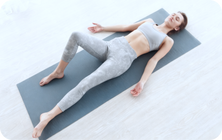
- Try a supported child's pose or knees-to-chest for 1–2 minutes when you're home—gentle pressure and stretching can ease the sensation of tightness.
- Keep water and a light snack within reach. Skipping meals and dehydration both make cramping feel worse.
Movement pairs well with heat: walk for ten minutes, then sit with a cordless pad while you work. The combination covers both the "stuck" feeling and the muscle tension.
How to Match an Option to Your Day
Most guides list remedies; the harder question is which one your Tuesday allows. Use these criteria in order—privacy, portability, time, and cost—before you buy anything.
| Your day looks like | Best first option | Backup | Skip for now |
|---|---|---|---|
| Desk job, long meetings | Wearable heat (cordless/USB pad) | TENS on lower back under clothing | Baths, long walks |
| On your feet or commuting | Heat before you leave + walking breaks | Microwavable pack at home in the evening | Bulky plug-in pads |
| Home or hybrid | Electric pad + 20-min walk | Red light belt session | Nothing—full menu available |
| Very heavy cramping days | Heat + rest + provider check-in | TENS if cleared for you | Intense exercise |
Two decision rules save money. First, try the cheapest option for two full cycles before upgrading—heat and walking cost almost nothing, and they tell you how responsive your cramps are. Second, buy multi-use over single-purpose. A hot/cold gel pack that also works on a stiff neck, or a combo TENS-and-heat device, earns its drawer space year-round. If you're shopping with a benefits card, check whether the specific item is FSA/HSA eligible—eligibility varies by product, so confirm before checkout rather than assuming.
This is also where a brand like Comfytemp fits naturally: drug-free, non-invasive tools designed for home use—cordless heating pads for workdays, wearable heat for the lower back, and combination devices—so the choice is about your schedule rather than a single "best" product.

The Mistake Almost Everyone Makes
The most common error is using heat or TENS only after the pain peaks. These tools work best started early—when cramping begins or even just before, if your cycle is predictable—and used in a steady block of 15–30 minutes rather than a frantic two minutes between meetings.
The second mistake is overheating. A pad set too high for too long can irritate skin; use a barrier layer, keep sessions moderate, and never fall asleep on a high setting.
The third is judging too fast. One ten-minute TENS trial on your worst day tells you almost nothing. Give any option two or three cycles, same timing and placement, before deciding.
When Cramps Need a Doctor, Not a Remedy
Non-drug options are for ordinary cramping. See a healthcare provider if pain doesn't respond to heat and over-the-counter options, if it stops you from working or attending school, if it's worsening cycle over cycle, if you bleed heavily or between periods, or if you have fever, unusual discharge, or pain during sex. These signs can point to conditions that home remedies won't address.
Be cautious with TENS, red light, and heat if you are pregnant or breastfeeding, have a pacemaker or implanted device, have epilepsy, or are recovering from surgery—consult your healthcare provider before use. And if symptoms persist or worsen despite your efforts, get assessed rather than adding more devices.
Frequently Asked Questions
Q1: Is heat actually effective for period cramps, or just comforting?
Both. ACOG lists a heating pad or warm bath on the abdomen among soothing measures for painful periods, and the mechanism—increased local blood flow and relaxed muscle tension—explains why it feels good and helps. It won't fix an underlying condition, but for typical cramps it's a sensible first step.
Q2: Can I use a TENS unit at work?
Often yes, if it's wireless or clips to a waistband and the pads sit on your lower back under clothing. Keep intensity low, sessions to about 15–20 minutes, and avoid using it while driving if the sensation distracts you.
Q3: How long should I try red light before deciding it works?
Give it several consistent sessions across at least two cycles, using the device as directed and close to the skin. If you notice no difference in cramp intensity or duration after that, it's reasonable to stop.
Q4: Are these options safe if I'm pregnant or trying to conceive?
Don't assume so. Heat, TENS, and red light all warrant a conversation with your healthcare provider during pregnancy or breastfeeding—especially TENS, which has clear contraindications.
Q5: Do I have to choose just one?
No—pairing works better than stacking gadgets. A short walk plus a wearable heating pad covers most workdays; TENS or red light can fill in when cramps are heavier. Keep the total routine under 30 minutes so you'll actually repeat it.
The Bottom Line
Start with heat and movement because they're cheap, evidence-friendly, and fit a real schedule; add TENS or red light only if those aren't enough, and give each option two cycles before judging. If your cramps regularly override your day, that's your signal to see a provider—not to buy another device.
Comfytemp's approach is built around that reality: professional-grade, drug-free home tools—cordless heating pads, wearable heat, and combination devices—that fit into a workday instead of replacing it. Pick the format that matches your hours, confirm FSA/HSA eligibility where it applies, and give it a fair trial before adding anything else.


