
























If you just unboxed a red light device and you're staring at the timer wondering what number to set, you're in the right place. The question of how much red light therapy per day is actually enough has a practical answer — but it isn't one fixed number for everyone, and the honest version depends on your device's power and how far you sit from it. This guide is written for new owners who want a concrete starting point rather than a vague "listen to your body."
Quick Answer
Most people starting with a red light device do well with 10–20 minutes per session, once per day, on a single body area — and many devices are designed around that range. If your device is low-powered or you hold it further from your skin, you may need to sit longer; if it's high-irradiance, shorter sessions often make more sense than longer ones.
The Short Answer: A Typical Daily Range in Minutes
The reason "10–20 minutes" keeps appearing is not arbitrary. Red light therapy effects are usually discussed in terms of dose, which combines the light's intensity (irradiance, often expressed in mW/cm²) with how long you're exposed. A common target range cited in consumer and clinical discussion is roughly 1–10 J/cm² per session, and a device emitting around 50 mW/cm² reaches the low end of that in a few minutes.
That dose math explains the practical range:
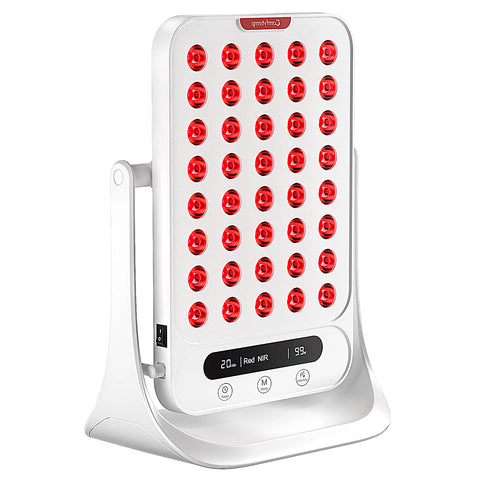
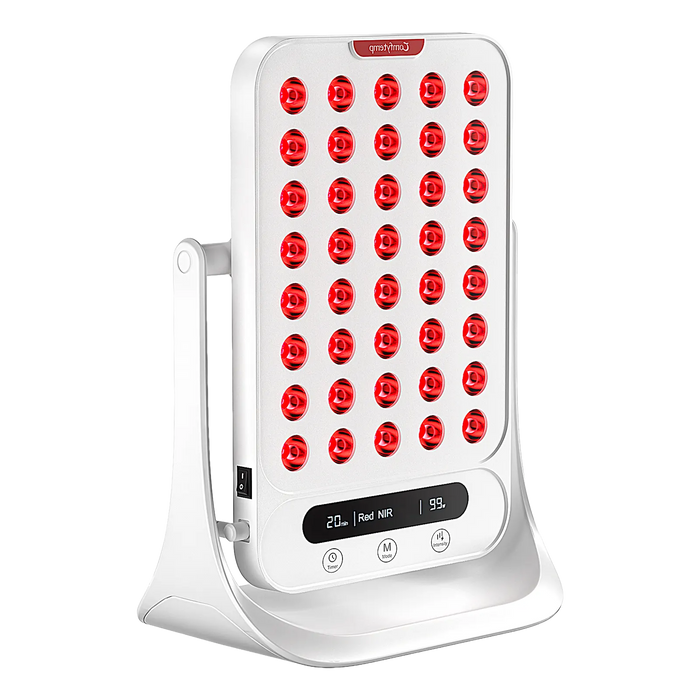
- Low-irradiance panels or wands (under ~30 mW/cm²): 15–20 minutes per area often makes sense.
- Mid-range devices (~50–100 mW/cm²): 10–15 minutes per area is a reasonable starting point.
- High-irradiance panels (well above 100 mW/cm²): shorter sessions — often 5–10 minutes — are common, because the same dose arrives faster.
Two things matter more than the exact minute count: consistency (daily or near-daily use is generally favored over occasional long sessions) and starting conservatively so you can judge how your skin and body respond. Some studies suggest benefits accumulate with regular use rather than one marathon session.
One caveat worth stating plainly: dose research on one wavelength or device does not automatically transfer to every product. A device advertising 660nm and 850nm wavelengths at a stated irradiance gives you the inputs to estimate dose — a device that lists no irradiance figure at all gives you almost nothing to work with.

Why Your Number Depends on Distance and Device Power
Your session length is really a function of three variables, and ignoring any one of them is the most common reason new owners either under-dose or overdo it.
1. Distance changes intensity fast. Light intensity drops sharply as you move away from the source — the inverse-square relationship means doubling your distance can cut intensity to roughly a quarter. A panel that feels strong at 6 inches may deliver a small fraction of that at 18 inches. This is why two people using the "same" 10 minutes can get very different doses. If your device has a recommended distance, follow it; if not, start closer than you think and shorten the time rather than sitting far away for an hour.
2. Irradiance is the number most marketing pages hide. Look for mW/cm² on the spec sheet. Without it, you cannot compare a 5-minute session on one device to a 20-minute session on another. When a brand claims "clinical-grade power" but publishes no irradiance, treat the comparison claims skeptically.
3. Wavelength matters for what you're targeting. Consumer devices commonly use 660nm (red) for surface-level skin comfort and 850nm (near-infrared) for deeper tissue. Many devices combine both. The right daily time is the same logic either way, but a device that only offers one wavelength may not suit the area you had in mind.
A simple decision framework for your first week:
| Your situation | Starting session | Frequency |
|---|---|---|
| High-irradiance panel, close distance | 5–10 min per area | Once daily |
| Mid-range belt or wearable | 10–15 min per area | Once daily |
| Low-power wand or eye mask | 15–20 min per area | Once daily |
| Sensitive skin or first-ever use | Half your planned time | Every other day, then daily |
If you're unsure which row fits, start in the bottom row and build up over a week or two.
Splitting Time Across Multiple Body Areas
New owners often want to treat the back, then the knee, then the shoulder in one sitting — and that's where daily time quietly balloons past what's useful. The key distinction: dose is per area, not per session. Twenty minutes on your lower back and twenty minutes on your knee are two separate doses, not one 20-minute dose.
Practical ways to handle multiple areas:
- Rotate by day. Alternate areas — back one day, knee the next — rather than stacking four areas into one long session every night.
- Use the "one area, one dose" rule. Give each area its own full session at the correct distance, and don't count overlap time (e.g., a panel covering both back and hips) as double.
- Cap total daily exposure sensibly. If you're spending more than about 30–40 minutes total across all areas on a mid-power device, you're probably better off shortening each area rather than extending the session.
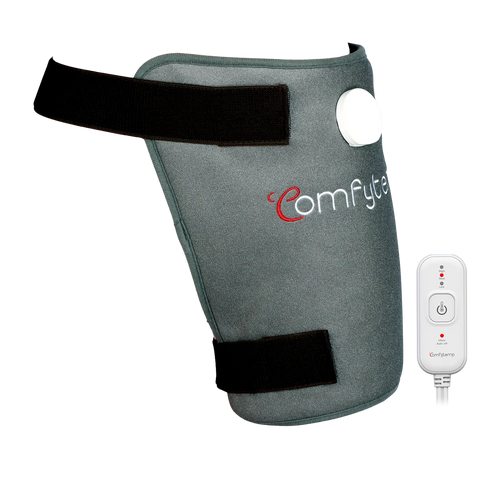
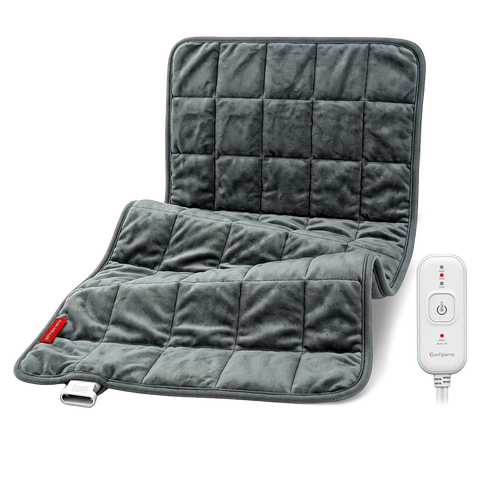
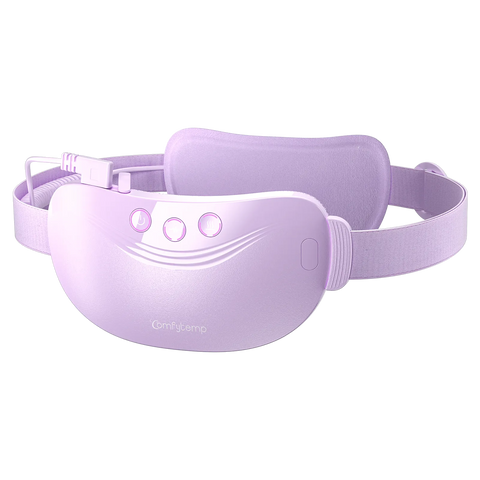
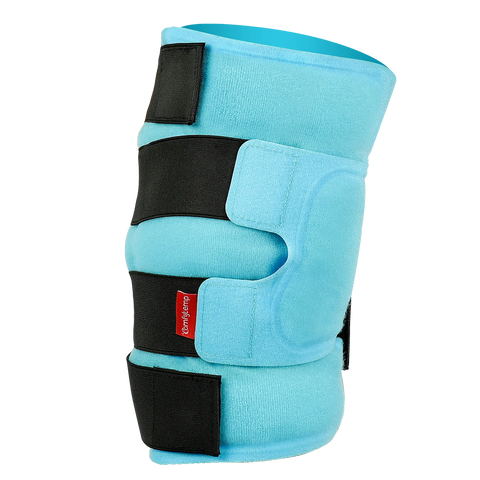
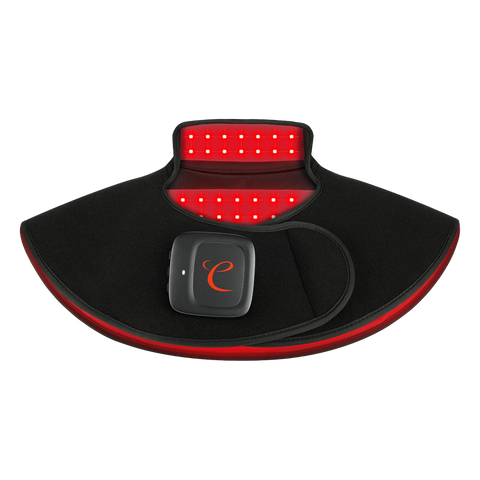
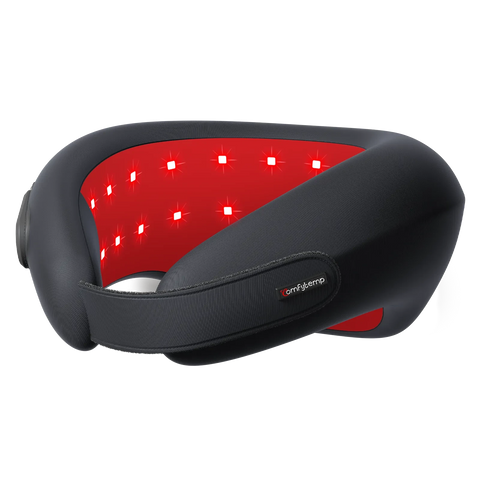
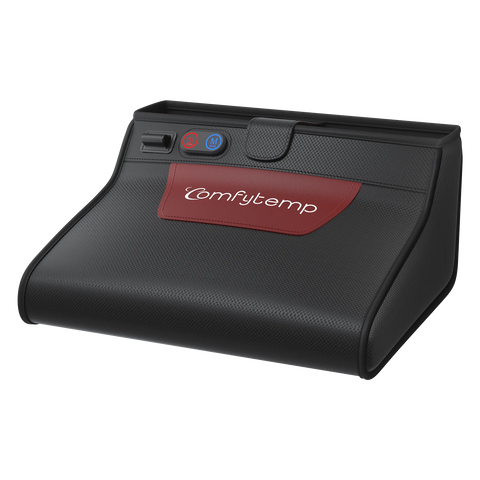
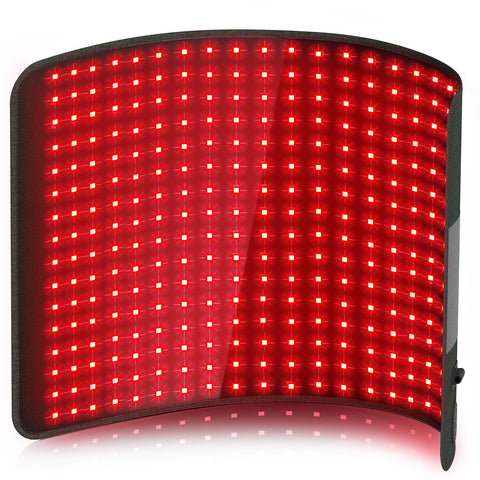
- Wearables make splitting easier. A red light belt, knee wrap, or neck-and-shoulder wrap stays at a fixed distance, which removes the distance variable entirely — one reason wearables are popular for multi-area routines. Comfytemp's red light line, for example, includes belt, knee, and neck/shoulder wearables as well as full-body mats, so the "distance" question is largely solved by the form factor.
If you have a full-body mat, treat it as a single area session rather than assuming it covers everything at once — coverage and dose are not the same thing.

What to Do If You Have More Time Than the Range Suggests
Plenty of people finish a 15-minute session and think, "I have another 45 minutes — should I keep going?" Usually, the answer is no, and the reason is dose, not patience. More time at the same distance means more dose, and past a certain point additional exposure doesn't reliably add benefit — some research even discusses a biphasic response, where very high doses perform worse than moderate ones in certain contexts.
Better uses of extra time than extending one session:
- Improve your setup. Get the distance right, remove clothing from the target area, and clean the device lens — small fixes often matter more than extra minutes.
- Add a complementary habit. Gentle movement, stretching, or a warm compress before your session can make the time feel more productive than simply adding minutes.
- Split into two shorter sessions. Some users prefer 8–10 minutes in the morning and again in the evening rather than one 20-minute block. There's no strong consensus that splitting is better, but it's a reasonable option if long sessions are inconvenient.
- Track for two weeks. Note session length, distance, and how you feel the next day. This is the only reliable way to find your number, because published ranges are starting points, not prescriptions.
A Simple First-Session Checklist
- Set a timer rather than guessing — most people overestimate short durations.
- Position the device at the manufacturer's recommended distance, or close enough that you feel gentle warmth (never discomfort).
- Protect your eyes with the included goggles if the device recommends it; don't stare into panels.
- Start at the low end of the range for your device type and stay there for 3–4 sessions before adjusting.
- Keep a one-line log: date, area, minutes, distance.
Who Should Skip It — and When It Won't Help
Red light therapy is generally considered low-risk for healthy adults, but it is not for everyone, and it is not a substitute for medical care.
- Pregnancy and breastfeeding: consult your healthcare provider before use.
- Children: consult your healthcare provider before use.
- People with a pacemaker, epilepsy, or photosensitive conditions: consult your healthcare provider before use; some devices carry specific warnings for these groups.
- Post-surgery or on broken skin: consult your healthcare provider before use, and never shine light on an open wound unless a clinician has cleared it.
- Anyone taking photosensitizing medication: check with a pharmacist or doctor first.
And be realistic about what "enough" buys you: red light therapy is best framed as a comfort and recovery-support habit, not a treatment for a diagnosed condition. If pain or a skin issue persists or worsens, see a medical professional rather than adding more minutes.
The Mistake Almost Everyone Makes
The classic error isn't using too little — it's chasing intensity. New owners crank the device to maximum, sit as close as possible, and run a 30-minute session on day one, then conclude red light "doesn't work" when they feel nothing or their skin feels irritated. The second most common mistake is the opposite: using a low-power device at too great a distance for too short a time, effectively delivering almost no dose and then giving up after a week.
Both failures come from skipping the two variables that actually matter — distance and irradiance — and treating minutes as the whole story. Get those two right, pick a time within the range for your device class, and stay consistent for at least two to three weeks before judging results.
Frequently Asked Questions
Q1: Can I do red light therapy twice a day?
It's generally considered acceptable, but there's little evidence that twice-daily sessions outperform once-daily use. If you prefer splitting your time, keep each session shorter (roughly half your usual length) and avoid stacking two full sessions back to back.
Q2: Is 30 minutes a day too much?
For a high-irradiance panel at close range, yes — 30 minutes can deliver a dose far above what's typically studied. For a low-power device at a greater distance, 30 minutes may be reasonable. The minutes alone don't tell you; the device's irradiance and your distance do.
Q3: How long before I notice anything?
Many users report noticing a difference within one to three weeks of consistent daily use, but responses vary widely and some people notice nothing. Some studies suggest effects build with regular use, so give it a few weeks of steady sessions before deciding.
Q4: Should I use it on bare skin?
Yes — light needs a clear path to the skin, so remove clothing over the target area and avoid thick lotions or oils that could block or scatter light. Clean the device lens periodically.
Q5: Do I need to use it every day, or can I take days off?
Daily or near-daily use is the common approach, but skipping a day isn't a setback. Consistency over weeks matters more than a perfect streak.
Bottom Line
For most new owners, 10–20 minutes per area, once per day, is the sensible starting range — then adjust for your device's irradiance and your distance from it. Start low, keep the setup consistent, and log your sessions for two weeks so you can find the number that fits your body rather than the number on a marketing page.
If you're building a home recovery routine, look for devices that state their wavelength and irradiance, sit at a fixed distance (wearables help), and fit how you'll actually use them daily. Comfytemp's approach — professional-grade, drug-free and non-invasive tools designed for at-home comfort — is built around exactly that kind of repeatable daily habit, so your session length becomes something you can plan rather than guess.


